



Health Books: Where to Start
Four Pamplona-Roger titles, five condition guides and a family reference set. Which health book to buy first, and which one you can skip.

The honest answer is short: something under R300, on a subject they already care about, that does not require them to accept anything before the first page makes sense. Everything below is that answer with the reasoning attached.
The book most often given to a friend who isn’t religious is The Great Controversy. It is the best known book in the range, which is exactly why it gets handed over, and it is usually the wrong first book.
It assumes a reader who already accepts Scripture as authoritative, already has some sense of church history, and already wants to know how it ends. Someone who has none of that opens it, finds several hundred pages about the Reformation, and puts it down. Nothing has gone wrong with the book. It was simply given to the wrong reader at the wrong point.
Give it to someone who asks. Give something else to someone who has not.
This is the easiest gift to give, because the person already has the question.
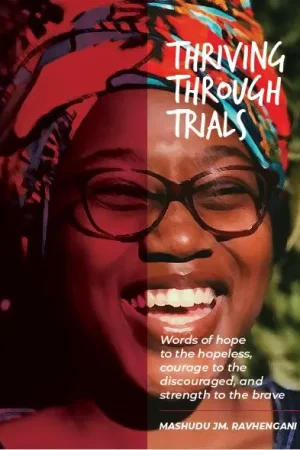
Mashudu Ravhengani on why Christians suffer, and how trials refine faith rather than destroy it. Written for someone in a hard season rather than someone studying the topic, which is the difference that matters when you are handing it to a friend.
Prophecy is the subject people with no faith background are most likely to be interested in and least likely to admit to. Two books do this without requiring belief first.
Mark Finley on Daniel 2: an ancient prophecy that set out 2,500 years of world history in advance, and what it says about the kingdom still to come. Short, readable, and built to be given away.
The Great Controversy (R270)
The conflict between good and evil from the early church through the Reformation to the end of the world. Give it to the reader who came looking for it.
Give it for a reason they can hear. “You mentioned you weren’t sleeping” beats “I thought you’d find this interesting.” A book given without a reason feels like a tract; a book given for a stated reason feels like attention.
Do not follow up on it. The moment the gift comes with an expectation attached, it stops being a gift. If they want to talk about it, they will raise it.
Give the cheap one. A R170 paperback can be left on a table and forgotten without either of you feeling anything about it. A R1,300 set cannot, and the weight of it is felt on both sides.
Your questions answered
Something short, priced under R300, on a subject they already care about. Thriving Through Trials for someone in a hard season, The Next Superpower for someone curious about the future, or Your Health in Your Hands if health is the way in.
Shorter, lower-priced editions produced to be given away rather than kept. They have the same content in a paperback format, priced so that giving several away is realistic.
Home Health Care at R70, followed by Enjoy It at R120 and Your Health in Your Hands at R170.

Four Pamplona-Roger titles, five condition guides and a family reference set. Which health book to buy first, and which one you can skip.